Showing posts with label technology. Show all posts

05 July 2017

Battery Gigafactory Global Consortium Investigates Financial Viability of Townsville

Townsville City Council (TCC) has announced they are buying an equity stake in a global investment consortium using council land to build and operate a foreign owned $2 billion battery Gigafactory at Woodstock.

The Council owned land is 40 kilometres west of Townsville on 400 hectares that included the former CSIRO Lansdown research station.

Former senior executive of Macquarie Bank and Chairman of Boston Energy and Innovation (BEI), Mr. Bill Moss said "the consortium is committed to transforming Australia's energy supply."

A similar size battery "Gigafactory" is planned for New York state located at the Huron campus, the home of the computer hardware giant IBM.

The global players
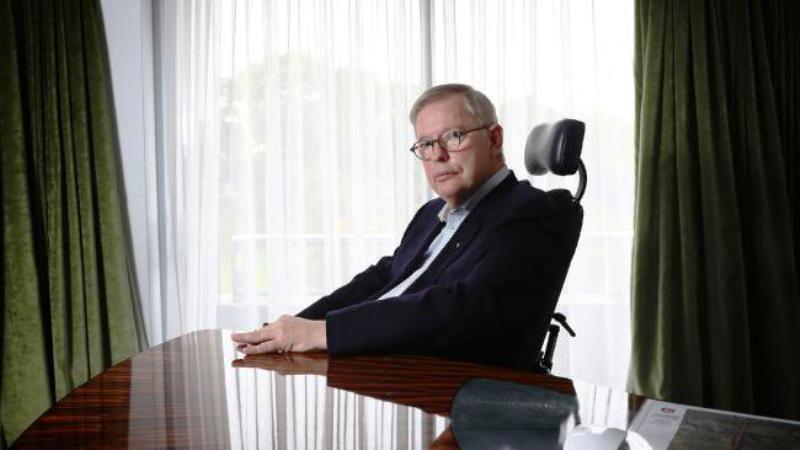
Image: Boston Energy and Innovation (BEI) Chairman, Mr. Bill Moss
Photos thanks: The Australia
The major players in the Townsville Battery Gigafactory investment consortium include:
  • Magnis Resources Limited
  • Eastman Kodak Company
  • C4V incorporated
  • C&D Assembly incorporated
  • TCC Development Corporation
In a statement to the Australian Stock Exchange (ASX), the consortiums Australian player, Magnis Resources said: "BEI is an ethical investment house specializing in the establishment of sustainable energy storage solutions in an environmentally sustainable manner to curb future energy problems faced by countries worldwide".

The TCC announced that a Memorandum of Understanding (MoU) was signed in April 2017 and that a "beneficial enterprise" development corporation has been established to legally share in the industrial development venture proposing the 15GWh battery manufacturing plant at Woodstock.

Economic benefits

"Townsville has increased the stakes to secure a state-of-the-art battery manufacturing plant and thousands of new jobs with a land offer that will deliver a major return for ratepayers," TCC reported.

The consortium estimates that the facility will create up to 1000 direct jobs and an additional 1000 in new jobs in direct support businesses and up to 5000 jobs in downstream original equipment manufacturing. The plant, once it is completed, could produce 250,000 car batteries per annum, 1 million home battery units or support 300 micro-grids to power small towns.

In an exclusive interview with the Townsville Bulletin, Cr. Hill stated: "the council was working closely with the consortium to meet its requirements for the project with land, power, transport links and workforce availability."

BEI Director, Mr. Corey Cooney said "We are also meeting with Minister Lynham as part of a push to create a new advanced manufacturing hub and smart technology and innovation base here in Townsville. We believe that a battery manufacturing plant is an anchor for that."

In a statement to Magnis Resources, Mr. Cooney said: "The consortium is committed to transforming Australia’s energy security by pledging the new batteries will be cost competitive, better performing, a sustainable supply chain, environmentally friendly and an alternative to current major energy suppliers."

Council land commitment

Ms. Young approved the announcement of the joint venture just this week 2 months after the MoU was signed and announced by the Australia/USA consortium on the New York Stock Exchange.
Image: TCC map of land proposed for Battery Gigafactory
"The TCC today approved a planning report recommending the council offer a portion of land at Woodstock for the proposal which is backed by a consortium led by BEI", the TCC press release stated.

"The land is part of the former CSIRO Lansdown research station, purchased by the council in 2002 to provide for future industrial uses.

The private investment consortium has been considering multiple sites proposed by TCC around the City requiring an area of at least 20 hectares. The 400 hectare Council owned site at Woodstock has rail transport, power and optic fibre services essential for a Gigafactory.

"Under the proposal, the Council would exchange the land for equity in the project that would be controlled under a specially set-up Council business entity and provide the city with an ongoing financial return," Ms. Young stated.

Reportedly a personal friend and mentor to TCC Chief Executive Officer Ms. Adele Young, Mr. Moss says these Gigafactories will be the "first of a series of proposed lithium-ion battery manufacturing hubs globally."

Battery energy and mining race

At least ten battery Gigafactories have been revealed in the past six months. Half a dozen have been planned in the last month across the world including the USA, Germany, Sweden, Hungry, Poland, China, Thailand and Australia in Townsville and Darwin.

Image: President Donald Trump Unleashing American Energy policy
Photo thanks: Hot Copper
The most aggressive player and inventor of the battery Gigafactory is the US billionaire and electric car manufacturer, Elon Musk who produces the Tesla car.

A global race for resources in cobalt and lithium is underway to supply the massive explosion in battery Gigafactories worldwide. Reducing the price of battery energy production and storage is critical to the global supply chain seeking cheaper electric cars and solar energy capture and storage solutions.

If the Queensland and Townsville governments are smart, they will position themselves in the negotiations with MoUs in hand from downstream manufacturing suppliers too.

A deal with an Aussie electric car maker or smart home manufacturing consortium, leveraging Australian engineering, could bring an unbreakable proposal to the global battery manufacturing consortium.

Critical to the plant's success is the anode material used in the manufacturing of Lithium-ion batteries.

Magnis Resources "plans to provide the materials from its Nachu graphite project in south-east Tanzania, which is planned to produce roughly 240,000 tonnes of graphite concentrate annually for a 15-year mine life from 2018."

Is the local leadership up to the task?

With such consumer demand making the offtake financing option key to the investment deal, competition across the globe for this new technology puts the leadership of Townsville in an extraordinary position of great opportunity.

From Townsville's perspective, focusing on stimulus jobs is a long game that builds on securing sustainable new age industries that could position the "Woodstock-Giru Valley" in the global gold rush for clean energy.

Image: Townsville City Mayor Cr. Jenny Hill
Photo thanks: Townsville Bulletin
The TCC land value equity stake could be the start of a portfolio of land/equity deals with an Australian owned and operated Tesla-like business model that could see the modern day Holden Ute back on the streets.

Selecting a suitable site showed the consortium behind the proposal the city was ready for business. “We have to make sure we keep the momentum going behind our negotiations and the fact that we now have a suitable site is a big step forward,” Cr. Hill said.

“The battery plant has the potential to create enormous economic benefits for the city and we are doing all we can to make it stack up.

“In addition to thousands of direct and indirect jobs, taking equity in the project in exchange for the value of the land will generate an on-going revenue stream for ratepayers.

“There is a still a long way to go in our negotiations, but the council is acting quickly to seize the opportunity.”

"In April, the council signed an exclusive MoU with a consortium led by BEI chairman Bill Moss AO which includes ASX Listed Magnis Resources and backed by US companies Eastman Kodak, C4V and C&D Assembly to investigate the financial viability of building a 15GWH battery manufacturing plant in the city," the TCC press release stated.

The consortium is investigating Townsville for the Gigafactory site "because of its infrastructure, location and it forward thinking council."

In a recent statement to the ASX, Mayor Cr. Hill's said, "This proposal if it comes off will be the biggest single stimulus for jobs and economic development in Townsville in decades".

"Townsville's economic fundamentals are strong and the hard work we're doing to sell the city's potential and attract potential investors is paying off and was the reason the consortium has come to the city," Cr. Hill said.

The Gigafactory plant could be operational in just 3 years supplying the car, home energy and utility battery markets but the Townsville bid is still competing with a site in the Northern Territory.

Further reading:


Free Subscription Offer

Click on image to join TREN
How to stay up-to-date

Do you have an opinion about the Battery Gigafactory?

The TREN community wants to hear your story.

Become a subscriber to TREN eMgazine and be the first to receive local breaking stories, analysis and opinions on the Townsville real estate market.


03 July 2017

Smart city Townsville, creative city … whose city is it?

Image: Smart Cities Challenges - Bank Information Security
Smart City - In 2007 US creative cities “guru” Richard Florida was flown up to Noosa to tell the local city council how they, too, could become a creative city.

Noosa was one of a long line of cities across the globe queuing up to pay big bucks to the US-based academic-entrepreneur. “Being creative” had become an almost universal aspiration. Who would not want to be a creative city?

And so Creative [insert name of city here] signs sprang up in the most unlikely places, along with stock shots of creative young things hunched over laptops in cafes.

Ten years later, different gurus are being flown around and the signs have been replaced by Smart [insert name of city here]. The stock shots are much the same, but now the young things are being innovative, disruptive and above all “smart”. That’s the trouble with fast policy: here today, gone tomorrow.

Below the surface more tectonic shifts can be felt. In its first outing in the mid-1990s the “creative city”, associated with thinkers such as Charles Landry, was an energising vision of a new role for cultural creativity in our cities.

Now expanded in democratic fashion beyond the world of “high art” to embrace popular, everyday creativity, culture would be a key resource for the 21st-century city.

Culture could re-activate the decayed industrial zones of the inner city, breathing new life into the dead infrastructures of factories and power stations, dockyards and tram depots, schools, barracks and banks. Culture could renew stale urban identities, catalyse new aspirations and stamp a different global brand on long-dormant cities.

And with the creative industries – culture plus all things design and digital – all that was needed were some creative people and a bit of entrepreneurial flair. Then we would have one of the industries of the future.

Creativity broke cities away from the old bureaucratic top-down planning silos of the industrial city and let them approach the future holistically. Culture would be what cities do best, earning a living and enjoying it at the same time.

By the time Florida had left Noosa the discontent was growing. Big investments in photogenic CBD developments seemed more intended for the creative class than local citizens, generating massive real estate profits while the suburbs languished unloved.

Creative industries turned out not to be so inclusive after all. They failed to soak up all those unemployed dirty industry workers and were reliant on educated workers willing to work their way up on low pay and high debt.

The turn of the smart city

Since the global financial crisis the energising vision has been around social justice, citizenship and the right to the city, with a return of community and activist-focused arts activities. Creatives are now less Californian start-ups and more counter-cultural “post-capitalists”.

Enter the Smart City, creativity without all those messy cultural bits. The tech start-ups were just as cool, the fab labs and hacker spaces just as disruptive, but now slotted onto a very different agenda.

This too promised a re-invention of the city, not now a cultural re-imagining but a complete re-tooling of the social and governmental infrastructure of the city. Courtesy of some very big global tech companies, a new digital infrastructure could be rolled out, applying sensors, data-capture devices and large-scale computing power to urban life.

Smart cities are data cities, promising efficient management of transport and utilities, security, and customised commerce. If the early Creative City embraced the messiness of city life, viewing it not as chaos but creative fecundity, the Smart City give us a clean utopian picture of the perfectly transparent city.

It’s messy on the surface, but with a big data back-room providing bespoke information for almost any aspect of urban living your care to ask for. What’s not to like?

A corporate taming of creativity

The app increasingly represents the
corporate-driven pacification
of the internet. AAP
That the brains of the Smart City – as envisioned by its corporate promoters – are increasingly embedded in its walls rather than its inhabitants reveals much about the trajectory of the digital economy so closely tied to Florida’s conception of the Creative City and its industries.
Internet scholar Jonathan Zittrain has described the rise of “app” culture as a betrayal of the creative potential unleashed by the mainstreaming of the internet. If the open internet was messy and chaotic, Zittrain argues that it was correspondingly “generative”, promoting experimentation and creativity.

By contrast, the “app” represents the pacification and domestication of the internet: its transformation from a productive medium to an infrastructure for consumption and marketing. Apps sort our music and photos for us, tell us where to eat, how to get there, and what to watch afterwards. The price of the newfound convenience that renders smart phones so addictive is a shift in the balance of control away from the end user.

For Zittrain, the “applified” world is, “one of sterile appliances tethered to a network of control” – which is not a bad description of the corporate blueprint for the Smart City.


As urbanist Adam Greenfield has observed, the corporate world has taken the lead in both envisioning and promoting its version of the “informated” city. It looks suspiciously like the commercial internet projected out into physical space.

The promise is one of efficiency, convenience and security: smart streets that adjust traffic flow in real time, walls that change images to suit our tastes (which have become indistinguishable from market preferences), even floors that cushion us when we fall.

For all the talk of disruption, the paradoxical promise of the smart city is one of data-driven efficiency and predictability. The promotional materials feature the same smart young things, freed up from the impositions of daily life (traffic, shopping, routine decision-making, even driving), to do … what?

Whose city is it?

There are surely possibilities here, but the version of smart city as automated city looks inhuman. It promises to serve people by rendering them increasingly efficient, perhaps to the point of their own redundancy.

To subject the future of the city to the corporate imaginary is to concede too much to the galloping privatisation of our cultural and informational infrastructure.


What if the right to the city were also a right to participate in shaping its information infrastructures and their implementation? Can we envision an alternative to centralised corporate control of the city’s data? And how might public priorities be redefined in ways that distinguish them from the private imperatives of the ruling tech giants?

These are the guiding questions for our June 15 symposium in Melbourne, which explores the possibility of another kind of urban culture beyond the tightly controlled formats of the Smart City/Creative City.

Author: Justin O'Connor and Mark Andrejevic from


Further reading:

Townsville sold out by PM Turnbull Smart City Deal

Turnbull Trio Caught with smoking gun - Townsville Smart City Deal's Catastrophic Legacy

Townsville Smart City Deal Exposed as National Security Threat

Guide to selling a luxury home

Guide to 22 knockout marketing tips to sell a home

Free Subscription Offer


Click on image to Join TREN
How to stay up-to-date

Do you have an opinion about the Townsville Smart City Deal?

The TREN community wants to hear your story.

Become a subscriber to TREN eMgazine and be the first to receive local breaking stories, analysis and opinions on the Townsville real estate market.


Disclaimer
The Conversation

28 June 2017

Townsvillian Giants in Education, Individualism and Indigenous Heritage

Image: Townsvillian's enjoying a celebration experience in a tropical lifesyle
Townsvillian's are of equal gender, giants in education, prefer de facto unions instead of marriage, progressive in their relationships and technology while abandoning their association with traditional faiths, except the schooling of our children, and boasts a higher than average indigenous heritage and cultural connection than the rest of Queensland and Australia.

Australian Bureau and Statistics (ABS) Census 2016 has revealed that Townsvillian's have an average age of 34 years with a higher percentage than the state or nation in tertiary education and 50-50 equal composition in male and female citizens.

The largest age group in the City is 20-24 years of age or 8.4% of the population, whilst people aged 65 years and over has risen to 12% from 9.8% in 2011 and we have seen Gen-x (35-55 years old) leaving the City.

Population

Townsville's Local Government area (LGA) population has increased from 174,462 people in 2011 to 186,757 in 2016 with an equal sex demographic of 50% between male and female.

Before the Census was captured on the night of 9th of August 2016, and immediately after, further job cuts occurred and unemployment increased in Townsville causing over nine thousand people to leave the City.

Queensland Nickel went into liquidation in April 2016 and other industries across the LGA struggled on the back of poor economic conditions since the 2011 census, which was captured a couple months after Cyclone Yazi impacted the North Queensland coast north of Townsville.

Townsvillian's Income

The median weekly income for people in a household over the age of 15 years is $1424, or $703 per person and $1705 per family. The per-person income is higher in Townsville than the state and national median income.

But the families and household income for Townsvillian's is lower than equivalent families and households across the state and nation.

Housing

22.8 percent or 14,991 of housing stock in Townsville are owned outright with no borrowings. 35.2% are owned with a mortgage and 38.6% are renting. Average monthly mortgage repayment is $1733.

Private dwellings in the city make up 79,982 properties, an increase of 7203 dwellings from 72,779 in 2011. We have an average of 2.6 persons occupying the household.

“Townsvillian's” are living in separate houses (or single unit dwellings) at 81% of the population, while 10.3% are living in semi-detected townhouses or units and 7.4% are living in flats or apartments. 40.1% of the dwellings have 3 bedrooms, 37% have 4 bedrooms or more and 16.6% has 2 bedrooms.

Renters are paying a median weekly rent of $300, an increase of $10 per week since 2011 and $35 per week less than the national average.

Families, Civil Union and Immigration

The Townsville area has 47,645 families with 1.9 children on average per household.

The composition of our families shows that 38.5% are couples without children, 41.8% are couple families with children, one parent families comprise 18.1% and other families are attributed 1.7% of the total families’ population.

71.1 percent of households are occupied by families, 23.9% are single or lone person households and 4.9% are group households.

81.1 percent of single parents are female, consistent with state and national statistics. On average over the last 5 years, 465 families per year were welcomed into the community.

Townsvillian's have a lower rate of registered marriages than the state and the national averages at 42.9% and a lower rate of social marriages at 43.5%.

De facto marriages are higher than the state and national averages at 14.9%. Persons not married are consistent with both state and national averages.

Community and Household Contribution

Townsville is consistent with the state and nation when it comes to domestic unpaid work. 70.7% said they have done unpaid domestic work in the past week, 28.6% cared for children, 10.4% provided assistance to a person with a disability and 18.4% did voluntary work in the past 12 months.

Transport and Technology

The number of motor vehicles per dwelling is on average 1.8 vehicles. 39.5% of the population have 2 motor vehicles per dwelling. 83.4% of the population has internet access from home, while 14.1% report no internet access at home.

Heritage and Culture

Aboriginal and Torres Strait Islander Townsvillian's make up 7% of the total population at 13040, higher than the state at 4% and nationally attributing 2.8% of the population.

78.6 percent of Townsvillian's are born in Australia, 2.6% are born in England, 2.3% are born in New Zealand, 0.9% is born in the Philippines, and 0.7% is born in India and South Africa making up 0.5% of the population's country of birth.

What is interesting is that 28.5% of the population identify with Australian ancestry, 27% with English, Irish 9.3%, Scottish 7.5% and German 4.0%.

63.8 percent of the population identify that both parents were born in Australia, 16.7% report that both parents were born overseas, 6.2% reported their father was born overseas and 4.9% say their mother was born overseas only.

85.2 percent of the population speak English at home while 9.0% speak a language other than English in the home.

Faith and Religion

Religious identity and association had the greatest change in the past five years as people drifted away from religion on the back of global terrorism, Christian adultery and growing connection to nature, social and environmental science.

53,057 people or 28.4% of the population has stated they have no described religion.

People of Catholic faith make up 26.5% of the population, down from 28.1% in 2011, Anglican followers comprise 15.2% and the Uniting Church religion makes up 5.1% while 10.3% of the population stated having no religion.

Education

However, Catholic education in secondary schools has the 2nd highest student attendance numbers, trailing government schools, and is 1.4% higher than the national average. Meanwhile, the Catholic primary school education system is nearly 2.5% higher than the national average.

17.1 percent of Townsvillian's have attended university or tertiary education, compared to the state at 14.8% and 16.1% across the country.

Although seemingly a minor observation in the statistics, 25.2% of the population did not state their education, which is slightly higher than the state and national averages.

But when assessed in the context of higher education levels and increased opportunities that come from skills, Townsville has a greater gap in education wealth standards.

Therefore, the population has skill capabilities below the state and nation and is less prepared as a community to take opportunities in employment that are on the ascendancy due to routine work being challenged due to rapid changes in technology.

Scope of Census

The Townsville LGA covers a district from Mutarnee to the north, Cungulla to the south and Palm Island.

Employment and occupation related data for singles and families will be realised by the ABS in October 2017.

Further reading:

Census 2016 reveals the typical Australian

Bust the Regional City Myths and Look Beyond the “Big 5” For A $378b Return

First home buyers grant “Pitted” by Queensland Treasurer

Guide to selling a luxury home

Guide to 22 knockout marketing tips to sell a home

Recipe Favourite - Chocolate and Caramel Give it a Crack

Free subscription offer


You're fired! The best summer. Bugger - Go Digital. Join TREN. It's Free. Explore more..
Click on Image to Join

How to stay up-to-date

Do you have an opinion about the 2016 Census?

The TREN community wants to hear your story.

Become a subscriber to TREN eMgazine and be the first to receive local breaking stories, analysis and opinions on the Townsville real estate market.

Disclaimer